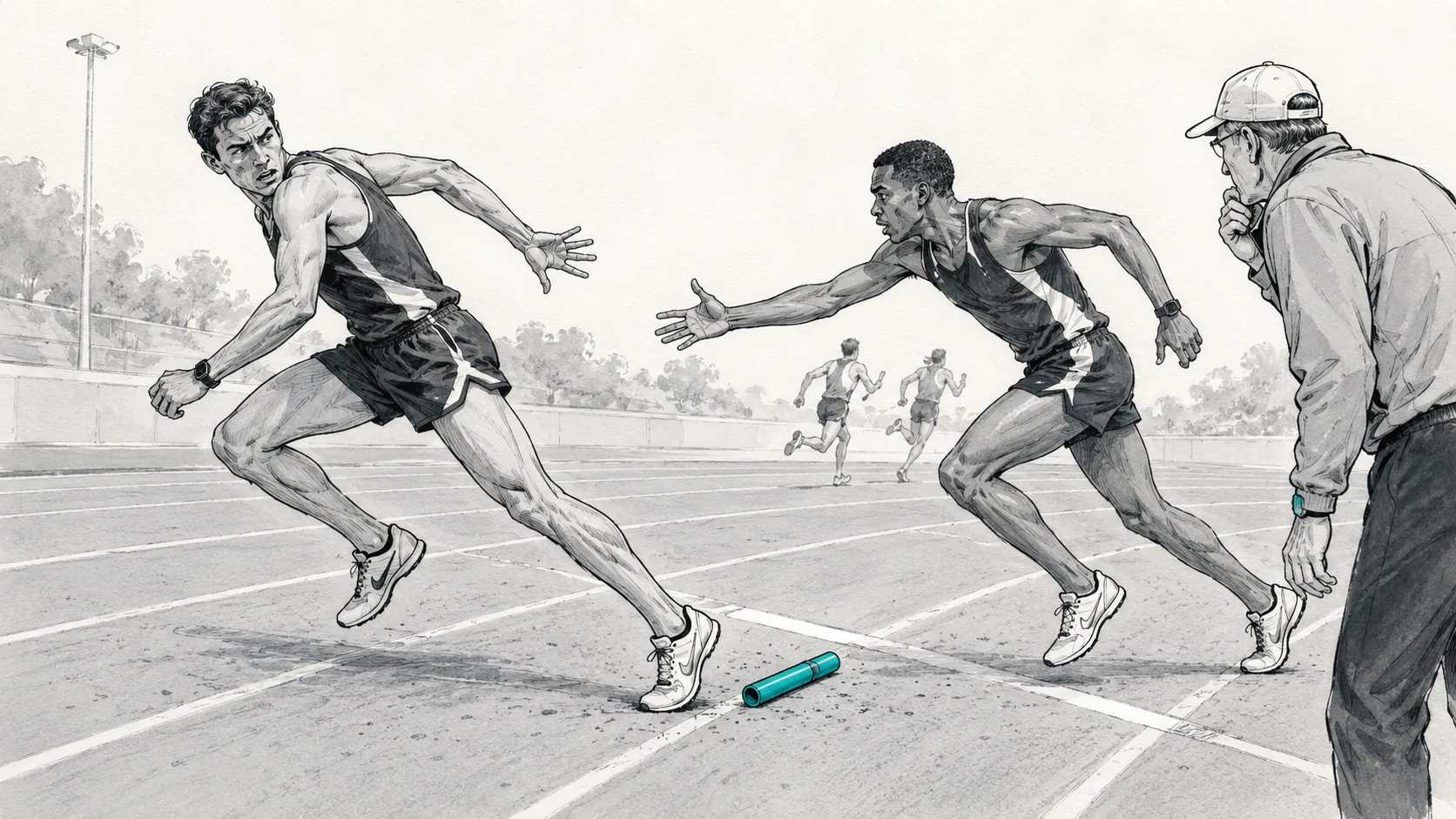
DevOps does not collapse because teams stop caring about flow. It collapses when the organization keeps the ceremonies but leaves the old power structure intact.
Many organizations have DevOps vocabulary now. They have pipelines, platform teams, automation, dashboards, and deployment metrics. Some still move slowly, recover poorly, and create unnecessary friction because the operating model never changed.
Tools can reduce toil. They cannot repair unclear ownership, late governance, or incentives that reward local optimization over system outcomes.
This is where many transformation programs lose the plot. They measure pipeline adoption, deployment frequency, ticket volume, or platform usage and assume the operating model improved. Sometimes it did. Sometimes the same old handoffs are just moving faster through better tooling.
The question is whether the organization changed how work is owned, governed, released, recovered, and improved.
The name changed, not the handoff
The most common failure pattern is simple: the labels changed, but the handoffs stayed. Development throws work over a different wall. Operations receives it through a new ticket queue. Security arrives through a late exception path. Architecture becomes a review event instead of a design constraint.
That is not DevOps. That is a supply chain with better icons.
You can see it in the language. Teams say they are waiting for approval, waiting for an environment, waiting for security, waiting for networking, waiting for someone to explain why production behaves differently. The delay is not always a people problem. Often it is a system design problem.
DevOps was supposed to shorten the distance between change and learning. If the operating model keeps learning at the end of the path, the organization will keep paying for surprises.
Flow requires operational ownership
Flow is not the absence of process. Flow is work moving through a system with clear ownership, fast feedback, visible constraints, and controls that arrive early enough to matter.
If nobody owns the runtime behavior, delivery speed becomes risk transfer. If nobody owns the platform experience, teams route around it. If governance only appears near release, teams learn to hide decisions until approval becomes urgent.
Ownership has to include the boring parts: alarms, rollback, capacity, documentation, access, cost behavior, dependency health, and the support path after launch. A team that can deploy but cannot explain how the service fails is not fully owning the service yet.
That does not mean every product team should become expert in every infrastructure layer. It means the platform contract must be explicit. The platform should absorb common complexity, and the product team should still own the customer-visible behavior.
Practical Framework
The DevOps Operating Model Check
Before adding another tool, check whether the operating model can answer these questions.
- Ownership: Who owns build, run, recovery, and customer-visible behavior?
- Feedback: Where does a failed change teach the team before it reaches production?
- Governance: Which controls are built into the path instead of added at the end?
- Platform contract: What does the platform promise, and what does the product team still own?
- Escalation: What decisions can teams make without waiting for a committee?
- Measurement: Which metrics improve the system, not just a dashboard?
Platform teams are not ticket factories
A platform team should reduce cognitive load and create reliable paths. It should not become a centralized gate with a modern name. The platform is useful when teams choose it because it makes the right thing easier, safer, and more observable.
If the platform requires constant exception handling, the product is unfinished. If teams bypass it, the feedback is data.
A mature platform does not win by mandate alone. It wins because it makes secure, observable, recoverable delivery easier than the custom path. That requires product thinking: documentation, support, migration paths, templates, golden paths, feedback loops, and clear boundaries around what the platform will not do.
The platform team should be able to say no too. If it accepts every special case, it becomes another pile of bespoke infrastructure with a nicer name.
Controls need to move upstream
Governance is often blamed for slowing delivery. Sometimes it does. More often, it slows delivery because it appears too late. A control that arrives after design and implementation has already hardened will feel like obstruction, even when the concern is valid.
Good DevOps operating models move controls into templates, pipelines, paved paths, policy checks, and architecture decisions. That is not less governance. It is governance with better timing.
The goal is not to remove friction blindly. Some friction protects the system. The goal is to move the right friction to the right place. A policy check in a pull request is different from a surprise review two days before launch. A platform template with logging and identity patterns built in is different from a spreadsheet asking whether those patterns were remembered.
The test
Ask where a production problem would be owned tomorrow morning. If the answer requires a debate, the operating model is still unfinished.
Discuss this article
Thoughtful comments, corrections, and notes from real-world practice are welcome. Discussion is managed through GitHub.
This space is intended for meaningful technical discussion, useful corrections, and field experience. Spam, personal attacks, low-effort comments, and vendor pitches may be removed.