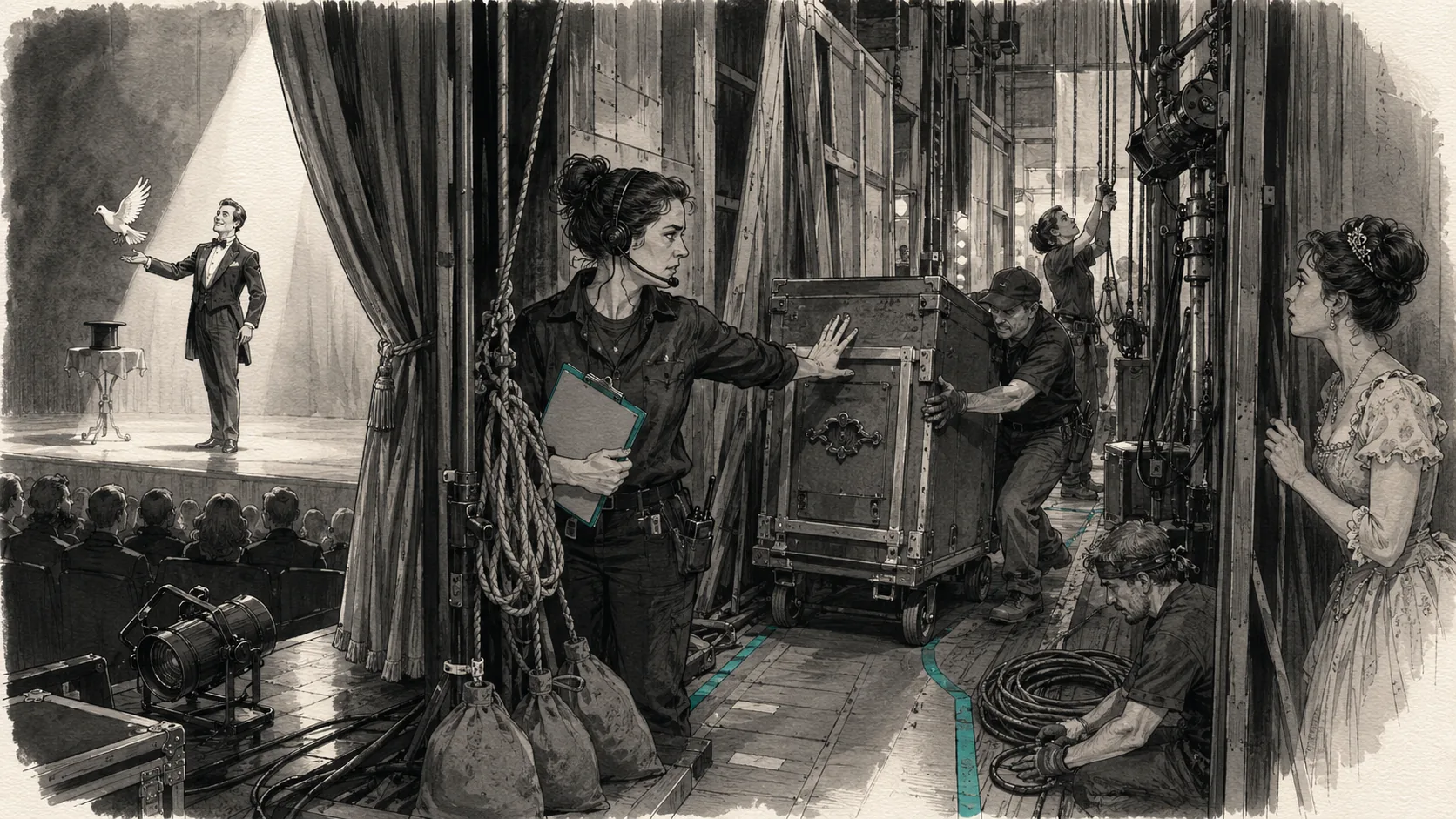
AI strategy is not a demo calendar. It is a decision system for where automation, prediction, generation, and judgment belong.
Tool-first adoption is understandable: the tools are visible, fast-moving, and easy to demonstrate. It also tends to produce experiments that are hard to govern and harder to operate. A useful strategy starts with the workflow, because that is where value, constraints, and accountability become concrete.
The workflow decides the value
AI is useful when it improves a real decision or reduces friction in a real operating path. A model that looks impressive outside the workflow can still add risk, rework, and confusion inside it.
The first question is not “What can this model do?” It is “Where does this workflow need better judgment, faster synthesis, stronger review, or less manual translation?”
A support team may need case summarization, cleaner routing, or safer response drafting before it needs a chatbot. An engineering team may need anomaly explanation, dependency mapping, or incident notes before autonomous remediation. The use case becomes stronger when it is attached to documented operating pain.
Risk and governance change with use
The same capability can be low-risk in one context and unacceptable in another. Summarizing public documentation differs from handling regulated data. Drafting an explanation differs from approving a claim. Recommending a next step differs from executing it.
Placement is one input to control, alongside data sensitivity, autonomy, users, consequence, and reversibility. An enterprise policy can establish common principles, but policy alone is usually insufficient. Control paths should vary with those factors.
Governance should make approved behavior easier: known data classes, reference patterns, access boundaries, logging expectations, review requirements, and escalation paths. Not every use case needs heavy ceremony. Each needs control proportionate to its consequences. A generic instruction to consult legal or wait for a committee may slow useful work and can encourage unmanaged experimentation; clear approved paths reduce both risks.
Practical Framework
The AI Workflow Fit Checklist
Use this before promoting an AI use case from experiment to operating capability.
- Workflow: What existing path changes if this works?
- Decision: What decision becomes faster, clearer, or better supported?
- Data boundary: What information is allowed, restricted, or out of scope?
- Human role: Who reviews, approves, overrides, or rejects the output?
- Failure mode: What happens when the output is wrong, incomplete, or overconfident?
- Evidence: What proof shows this improves the workflow instead of adding theater?
Ownership and review are architectural controls
Human review is useful only when the reviewer has enough context, authority, and time to challenge the output. A nominal approval step can preserve the appearance of control while moving judgment somewhere less visible.
When AI drafts, someone owns the message. When it recommends, someone owns the decision. When it classifies, someone owns the downstream effect. Strategy should make those ownership lines explicit and define when a person may override, reject, or stop the system.
The final test is simple: what decision gets better if the system succeeds, and who can reverse the outcome if it fails? A vague answer means the use case is still an experiment, not an operating capability.
Key takeaway. An AI use case is not ready for production until authority and reversibility are as explicit as the model and the workflow.
Source notes
- NIST, Artificial Intelligence Risk Management Framework (AI RMF 1.0) (2023). Provides a voluntary structure for governing, mapping, measuring, and managing AI risk across the lifecycle. It supports the article’s emphasis on context, accountable ownership, and controls matched to risk. Source: NIST AI 100-1.
- NIST, Artificial Intelligence Risk Management Framework: Generative Artificial Intelligence Profile (2024). Extends the AI RMF with generative-AI risks and suggested actions. It supports the need for defined data boundaries, monitoring, human oversight, and incident handling. Source: NIST AI 600-1.
Discuss this article
Thoughtful comments, corrections, and notes from real-world practice are welcome. Discussion is managed through GitHub.
This space is intended for meaningful technical discussion, useful corrections, and field experience. Spam, personal attacks, low-effort comments, and vendor pitches may be removed.