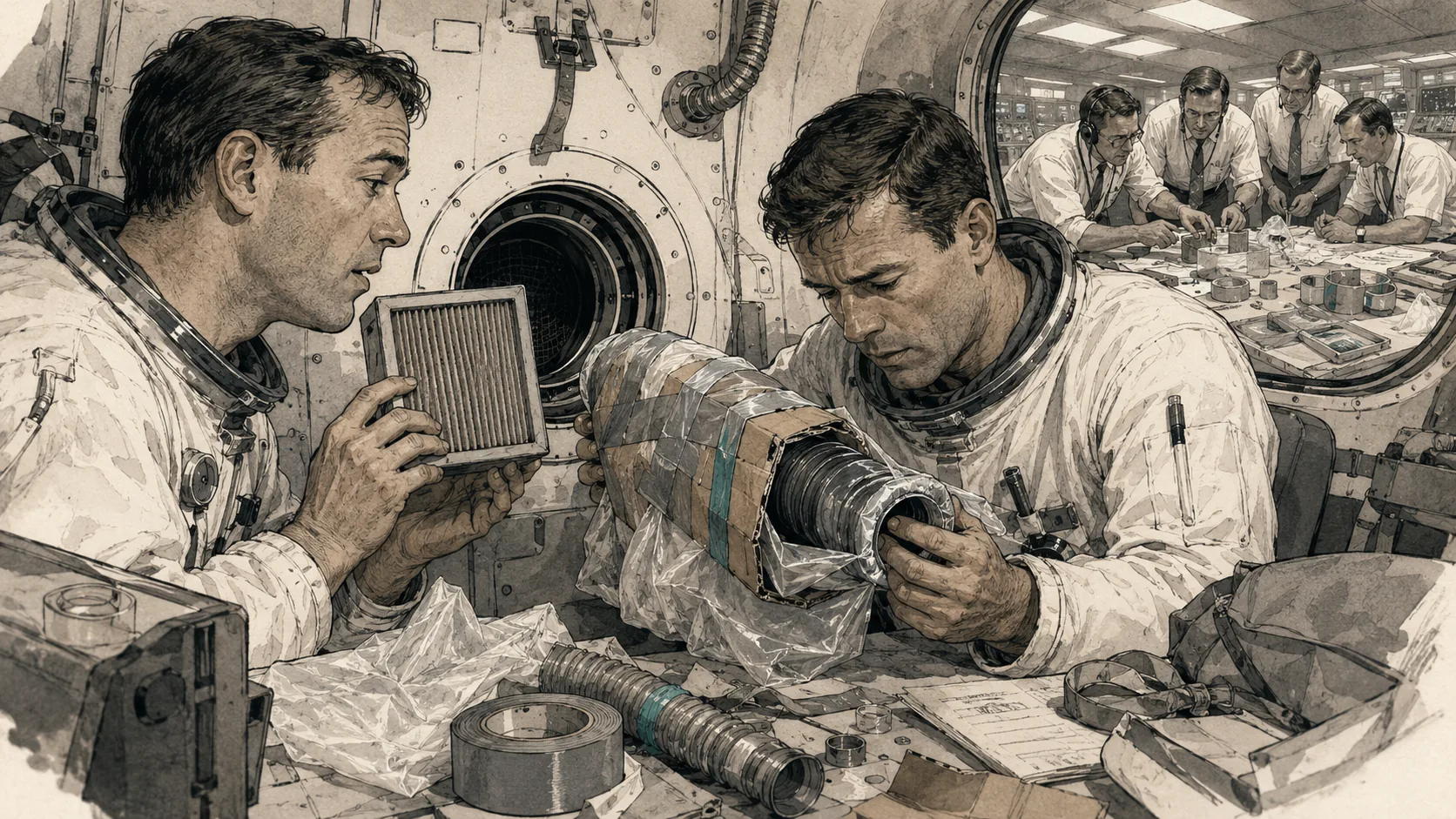
Perfection is not an operating model. Recovery is.
Cloud continuity gets weaker when teams talk about availability as if it were a promise made by architecture diagrams. Real continuity lives in ownership, telemetry, recovery paths, decision authority, and rehearsal.
The question is not whether a platform can fail. It can. The useful question is whether the organization knows what happens next.
That next step is where a lot of continuity programs get exposed. The monitoring dashboard may be green until it is not. The architecture may have redundant components. The cloud provider may offer multiple recovery options. None of that matters enough if the team does not know who makes the call, which path to use, what customer impact is acceptable, and how to confirm the system is healthy after recovery.
Continuity is not a static property of infrastructure. It is a practiced capability.
Continuity starts before the incident
Many teams discover their operating model during an outage. That is too late. A recovery path that depends on tribal knowledge, heroic access, or a person who happens to remember the deployment history is not a recovery path. It is an incident waiting its turn.
Good continuity design names the failure modes that matter. It connects those failure modes to owners, signals, playbooks, rollback paths, and decision authority. It turns recovery from an aspiration into an operating behavior.
In real environments, the fragile point is often not the primary system. It is the glue around it: an identity dependency, a certificate renewal, a data pipeline, a queue that nobody watches, a batch job that silently backs up, or a manual approval path that only works during business hours.
If the recovery plan only covers the obvious component, it is not a recovery plan. It is a partial inventory.
Perfect systems hide weak recovery
When a system appears stable for a long time, recovery muscles decay. Dashboards become ornamental. Runbooks fall behind. Escalation paths depend on memory. The first serious incident then tests not only the architecture, but the organization's honesty about how the system is operated.
Continuity is not proven by a quiet month. It is proven by a clean recovery when something important breaks.
This is why rehearsal matters. A tabletop exercise is useful, but only if it is honest. A restore test is useful, but only if it validates the data people actually need. A failover test is useful, but only if the team also proves how traffic returns, how customer communication works, and how the after-action review changes the system.
Otherwise the exercise becomes theater. The team feels prepared because the script worked, while the real system remains untested.
Practical Framework
The Recovery Reality Check
Before calling a system resilient, answer these questions in plain language.
- Failure mode: What specific failure are we preparing for?
- Signal: How will we know it is happening before customers have to explain it to us?
- Owner: Who has authority to act, not just knowledge of the problem?
- Path: What is the rollback, failover, restore, or degrade path?
- Time: What recovery time is acceptable for this business context?
- Rehearsal: When was the path last tested under realistic constraints?
Recovery needs decision authority
Technical recovery often fails because the decision model is unclear. A team may know how to restore a service but not who can approve degradation. A platform may have failover capability but no agreement on when to trigger it. An application may have backups but no owner for validating restored data.
Continuity is a leadership system as much as a technical system. The architecture should make decision authority visible before the incident starts.
Decision authority also prevents overreaction. When nobody knows who can approve degradation, teams either wait too long or escalate everything. Both patterns create noise. A continuity plan should make the acceptable tradeoffs explicit: protect data first, preserve customer trust, degrade noncritical functions, pause risky automation, or accept delay to avoid corruption.
Design to fail gracefully
Not every failure deserves the same response. Some capabilities must fail closed. Some should degrade. Some can pause. Some should move traffic. Some should protect data and accept delay.
Good continuity design separates these choices. It avoids treating every incident as a total emergency and every dependency as equally critical. That separation is what lets teams respond with discipline instead of noise.
Graceful loss is a mark of maturity. It means the system can protect what matters most when not everything can be protected equally. That requires business context, not just technical redundancy.
The test
Ask a simple question: if this system fails at 2:00 a.m., what exactly happens in the first fifteen minutes?
If the answer is a meeting, the recovery path is not designed yet.
Discuss this article
Thoughtful comments, corrections, and notes from real-world practice are welcome. Discussion is managed through GitHub.
This space is intended for meaningful technical discussion, useful corrections, and field experience. Spam, personal attacks, low-effort comments, and vendor pitches may be removed.